
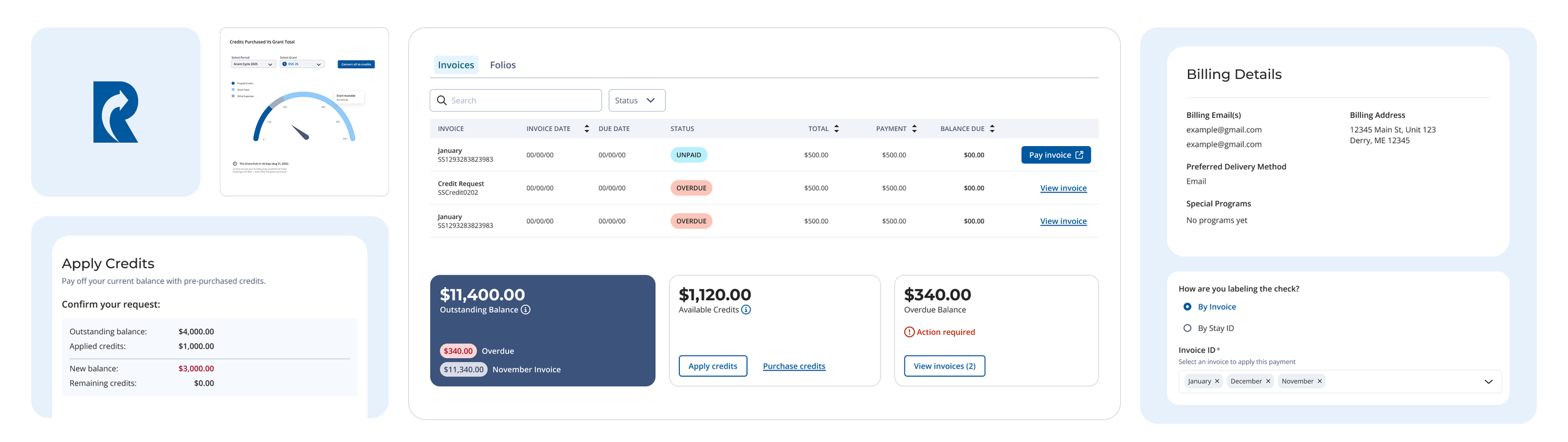
Payment Portal
Overview

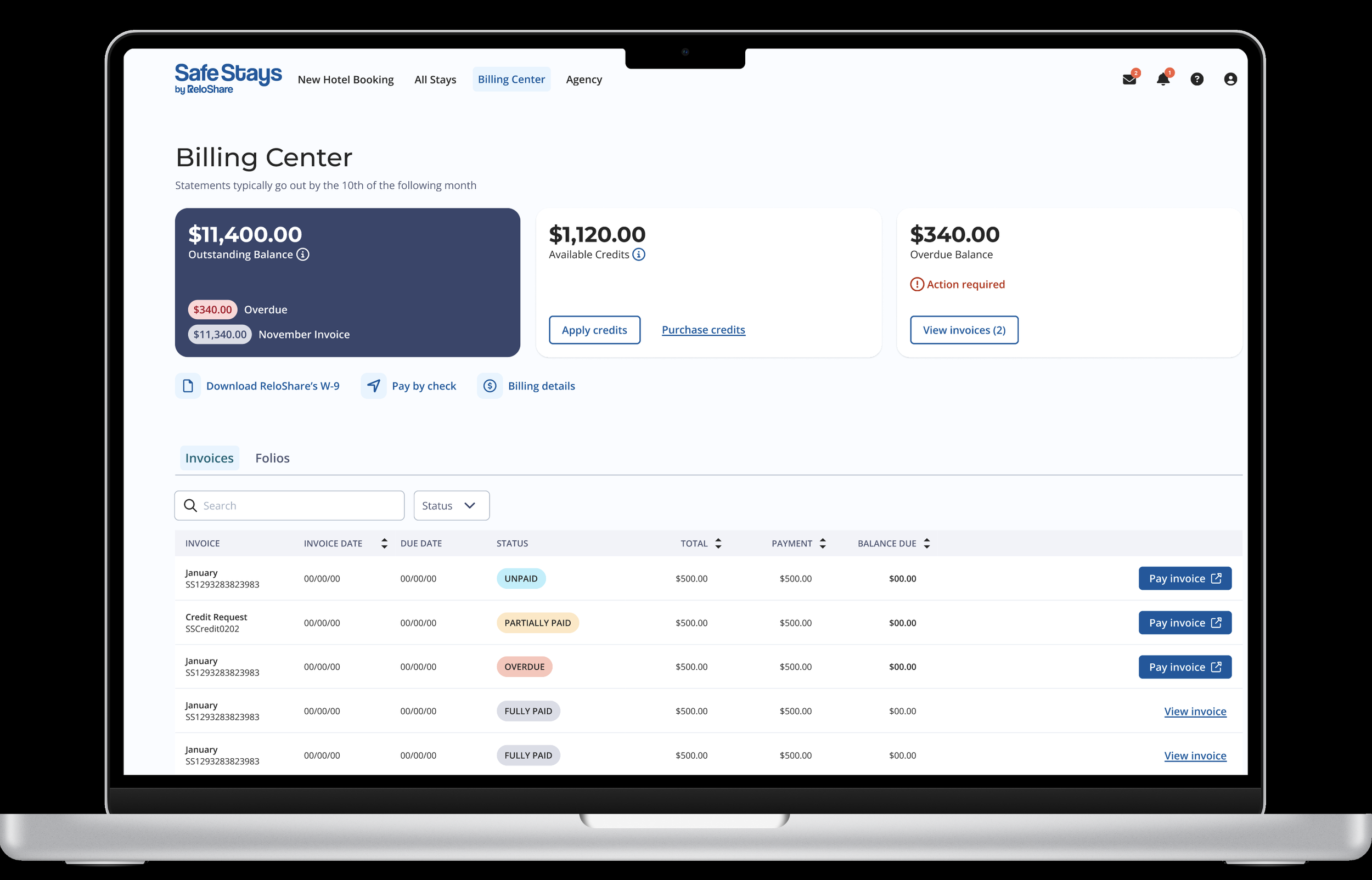
Safe Stays by ReloShare is a booking platform for hotels and emergency housing used by social services. I designed and helped launch the company’s first payment portal based on research into payment operations and billing workflows.
The solution simplified credit and billing management, reduced manual errors, and improved collaboration across teams, significantly reducing administrative overhead.
At one of the agencies that consistently struggled with overdue balances, this metric improved from 60% to 30% after launch. Interest in the feature also increased, reflected in a 300% rise in Google searches for Safe Stays Credits. The project was successfully shipped to production, with most core features delivered and early adoption seen shortly after release.
Duration
Phase one — 3 months
Phase two — 2 months
My Role
UX Designer, UX Researcher
Tools
Figma, FigJam, Maze, Figma Slides
Skills
Field Study, User Interviews, Flow Chart, Priority Matrix, Low-Fi Wireframes, Hi-Fi Prototypes
Research
Problem
Agencies are asking for more flexibility and control over payments, and how folios and invoices are generated — but every custom request still relies on manual edits from our team, adding to the operational load.
“It takes me up to an hour to match a check if information is missing, and I have to reach to people from different departments.”
-Senior Accountant at ReloShare
Common Scenario 1
Senior Accountant receives a mailed check. The information on the check and on our system doesn’t match.
This process can take anywhere from an hour to a few days.

Common Scenario 2
Agency wants to know if they have enough credits to cover a new folio.
Involves up to 4 users, 3 departments, and a chain of emails - just to answer one question.

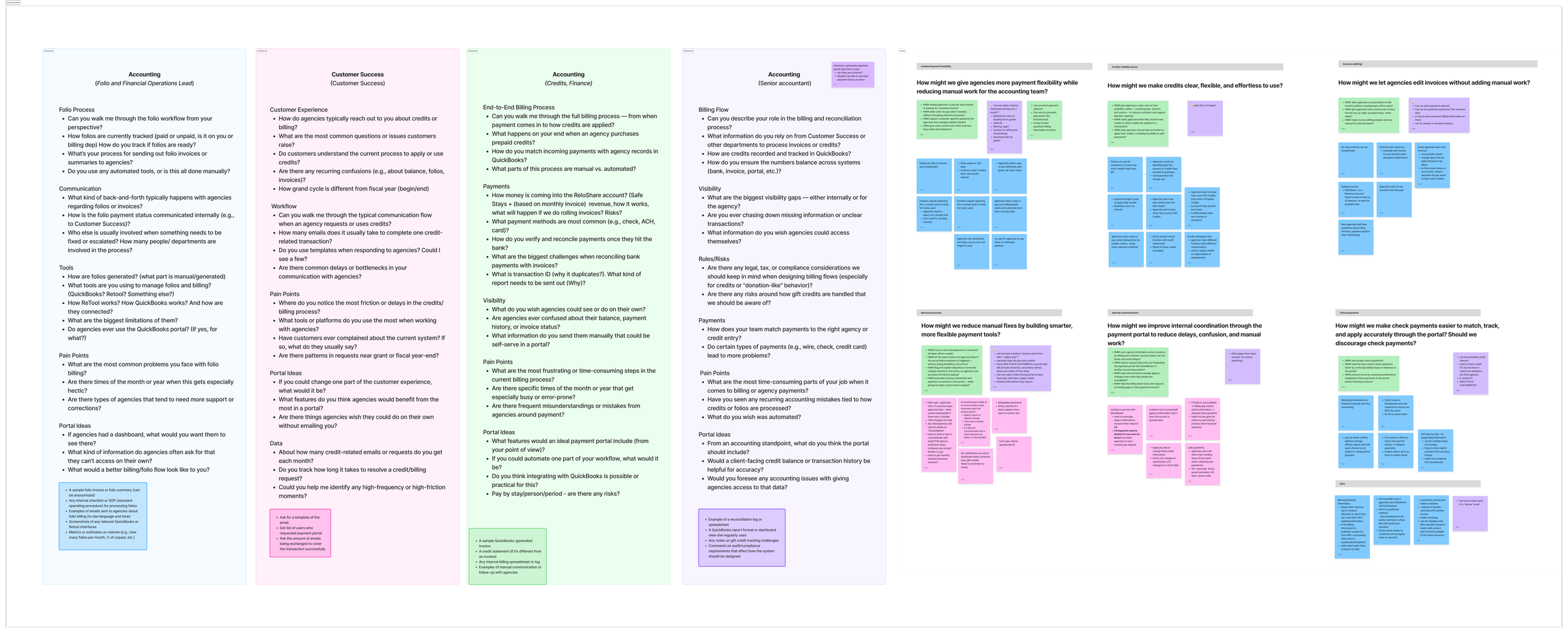
Revealing main themes from user interviews
To address key pain points, the new portal focuses on Visibility and Control issues

Agencies can’t see their own balance
Agencies can’t see who/how much/when they receive credits and how they are being applied
Agency staff and internal teams lack consistent access to payment info—causing frequent back-and-forth

Internal team needs to manually edit invoices for any missed/ paid/ removed/ added items
Lack of tools to apply credits, manage funding types, or track new charges.
If the names don’t match from invoices and checks - it’s difficult to match the payment
Uncovering the True Cost of Every Step
By mapping the flow linearly, we revealed just how many actions were tied to each credit and payment task - making inefficiencies visible and giving stakeholders a clear case for automation.
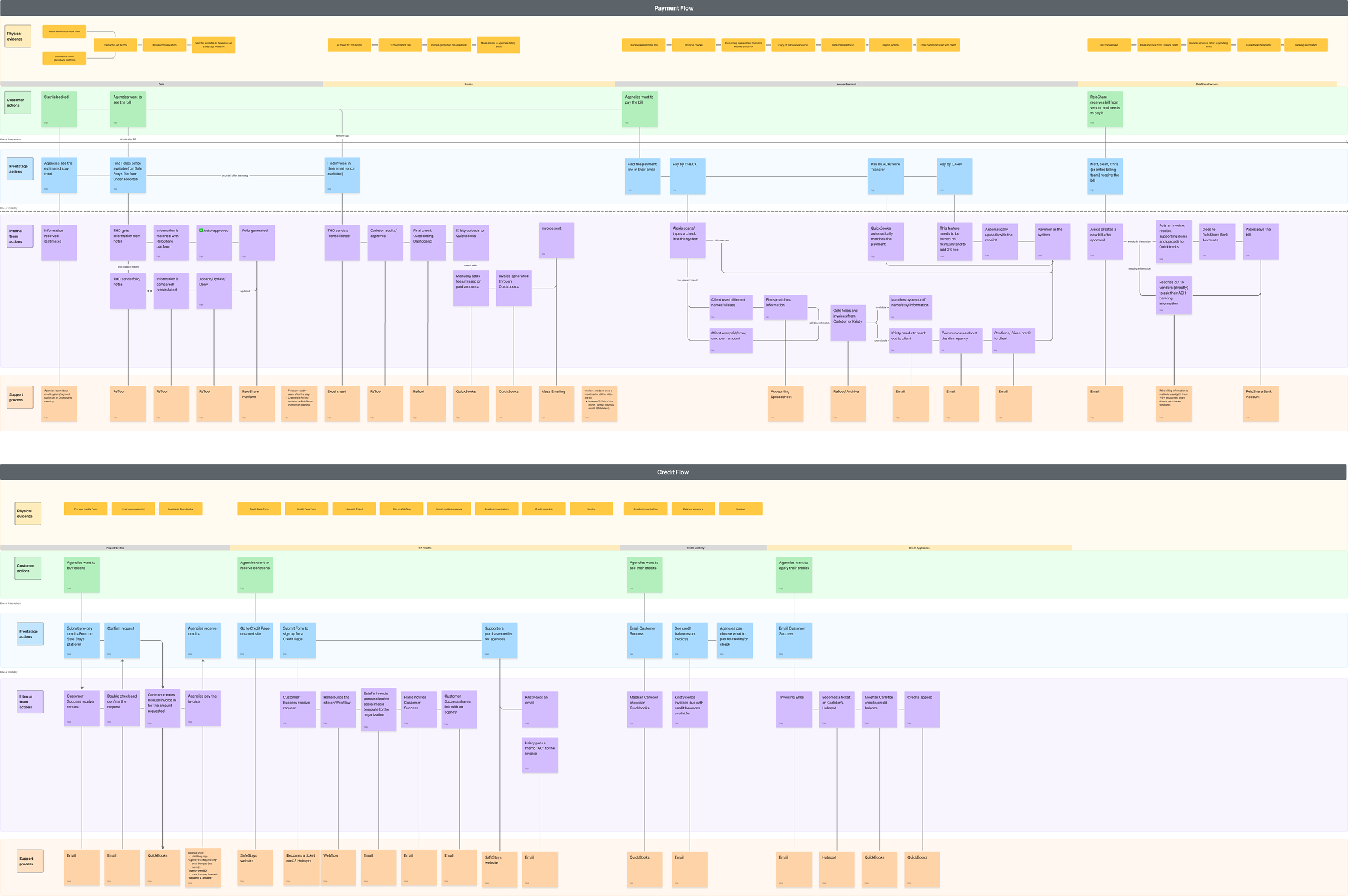
A linear view exposed the hidden weight of every payment task, helping stakeholders see where time and revenue were being lost.
How Might We
Improve visibility around payments, balances, and billing status
Reduce manual work for internal teams and external communication (Emails)
Not replace existing financial systems or accounting tools
Not introduce improvements that benefit one group but create disruptions to current processes for another.
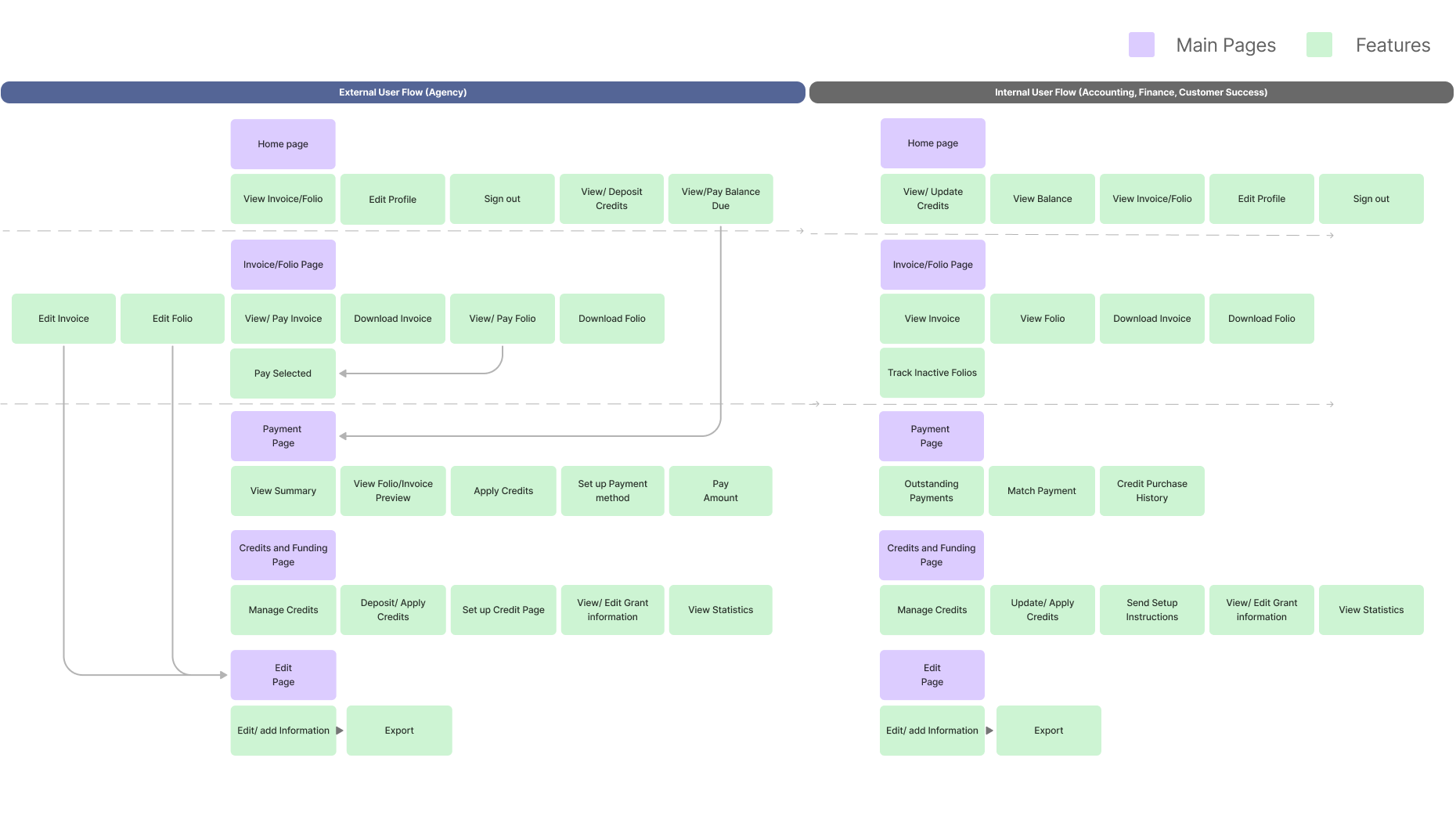
To address these problems, we created a feature map that would benefit both groups (internal: billing team, and external:agencies)
Solution
Phase 1
As part of the internship project, I was tasked with exploring opportunities to improve the accounting workflow. I identified key pain points and translated them into solution concepts. These ideas were brought to life through prototypes and presented to stakeholders, helping validate both the problem space and the potential impact of the proposed solution.
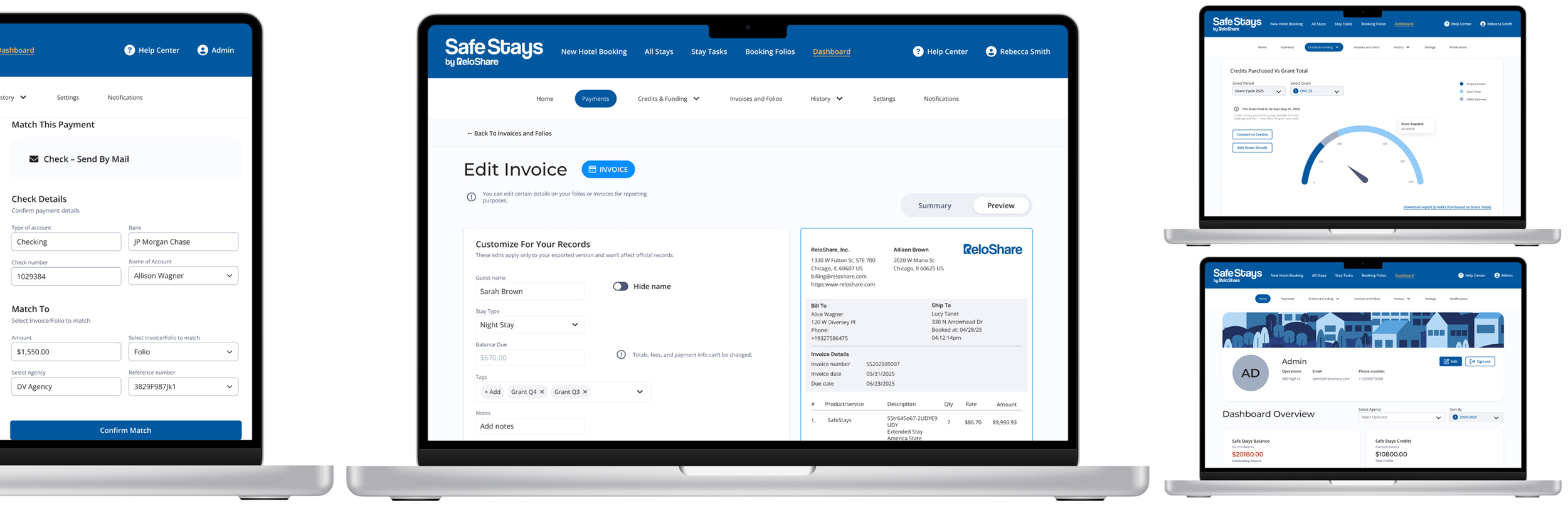
Design Evolution
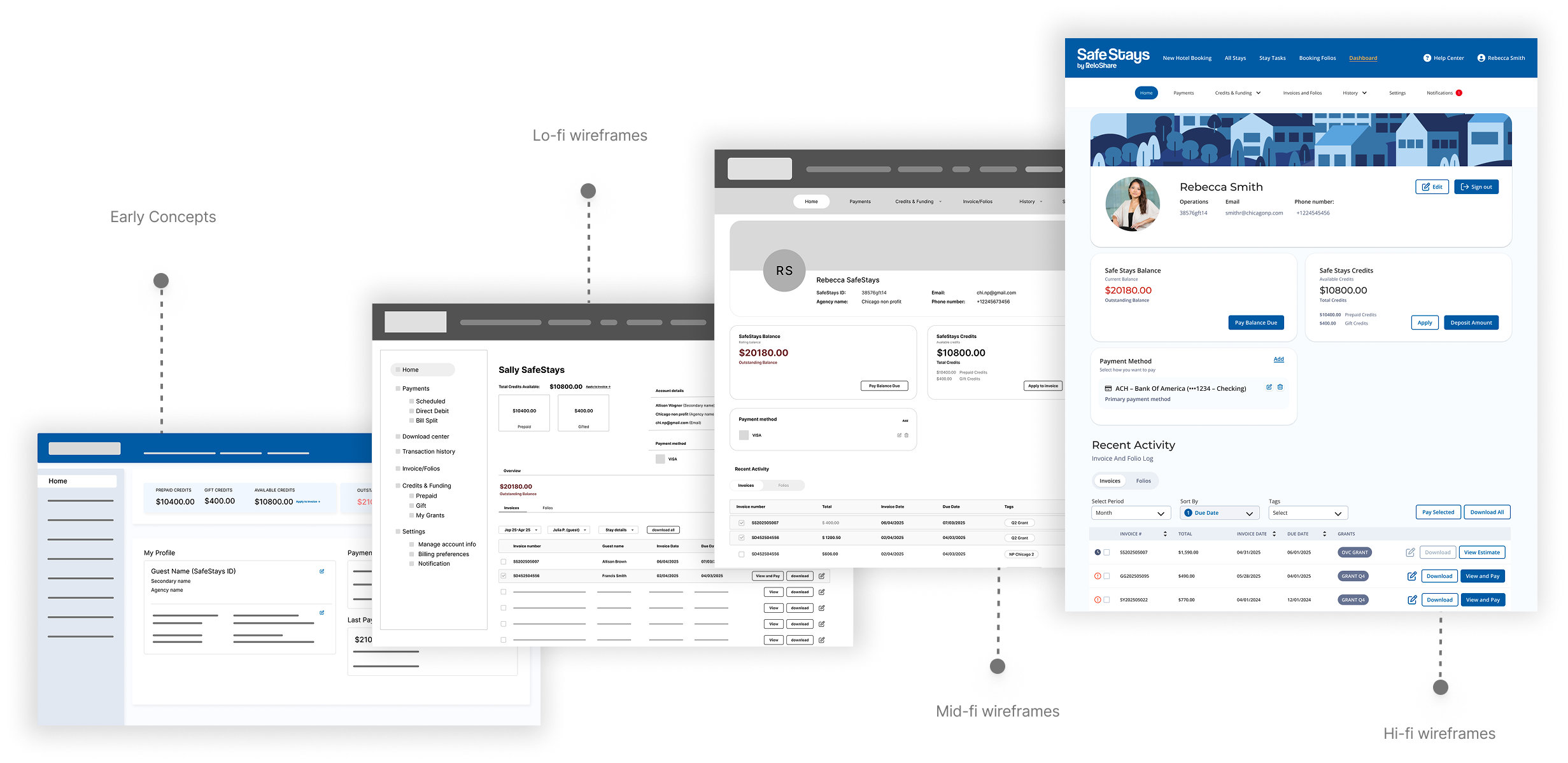
I started with early sketches and low-fidelity wireframes to figure out the basic layout and structure.
With each round of feedback, we refined the designs to improve clarity and usability.
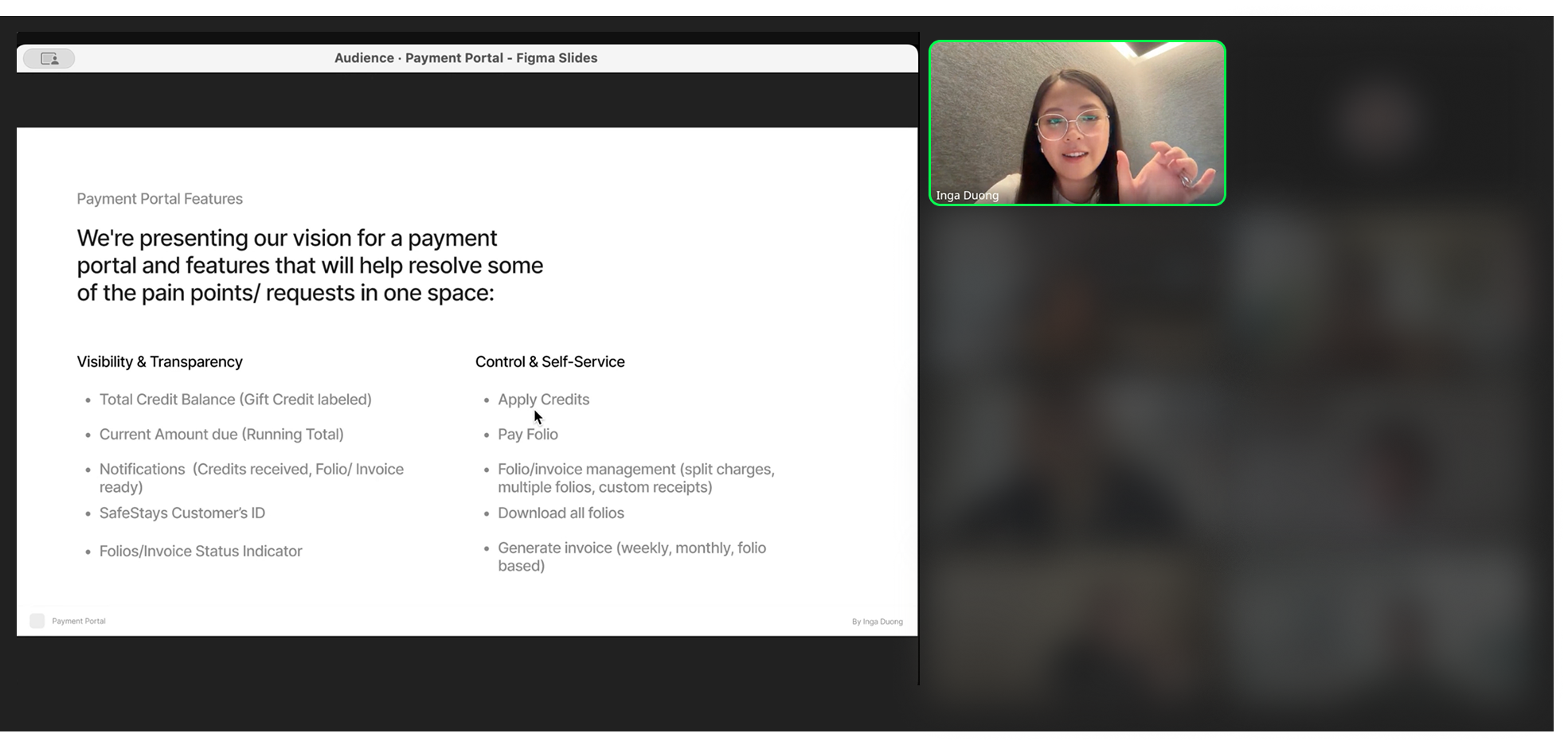
Presenting to Stakeholders
To validate feasibility and align expectations, I presented the concept to stakeholders. We discussed opportunities, technical constraints, and expected impact to ensure a realistic shared direction. The positive response helped gain support for the idea, and a few months later the project was given the green light.
Solution
Phase 2
The positive response from stakeholders led to the decision to evolve the concept into a product initiative. While some features from the exploration phase were postponed, the most impactful functionality was integrated into the platform and successfully launched.
Testing with users
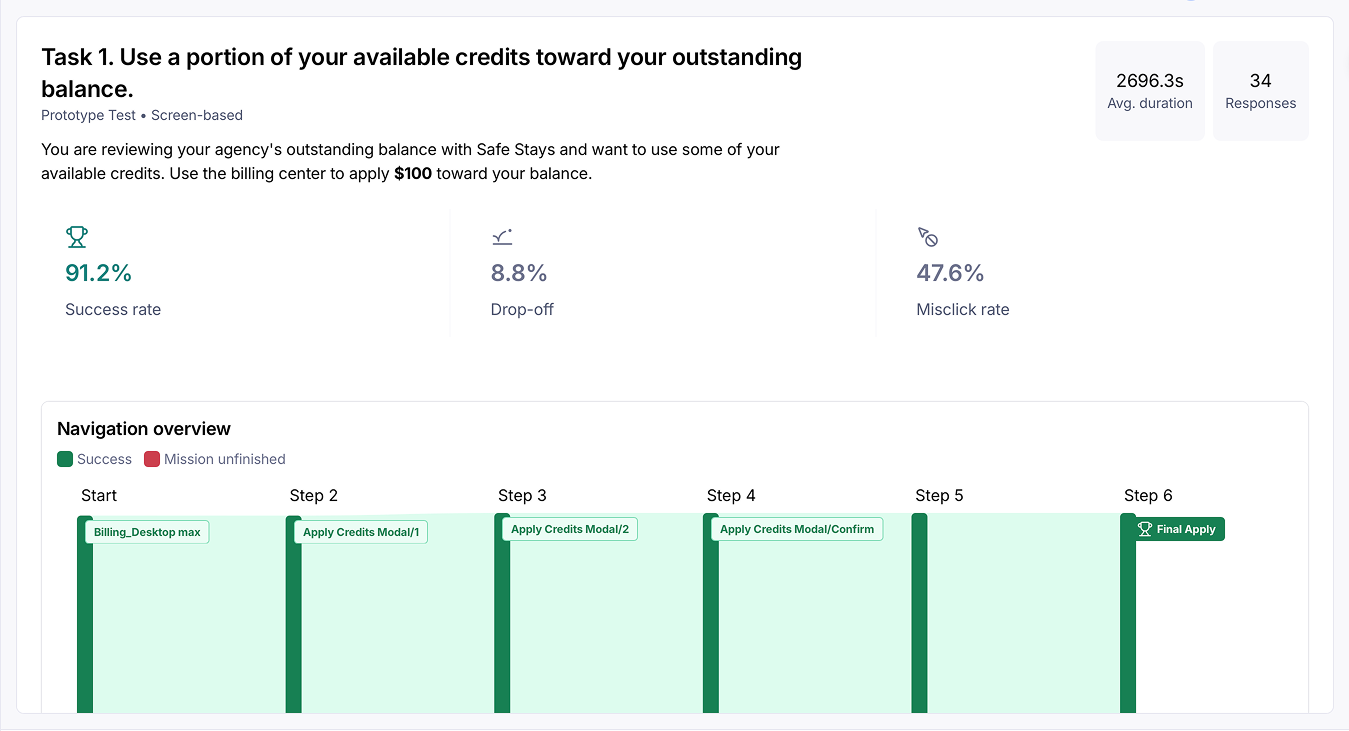
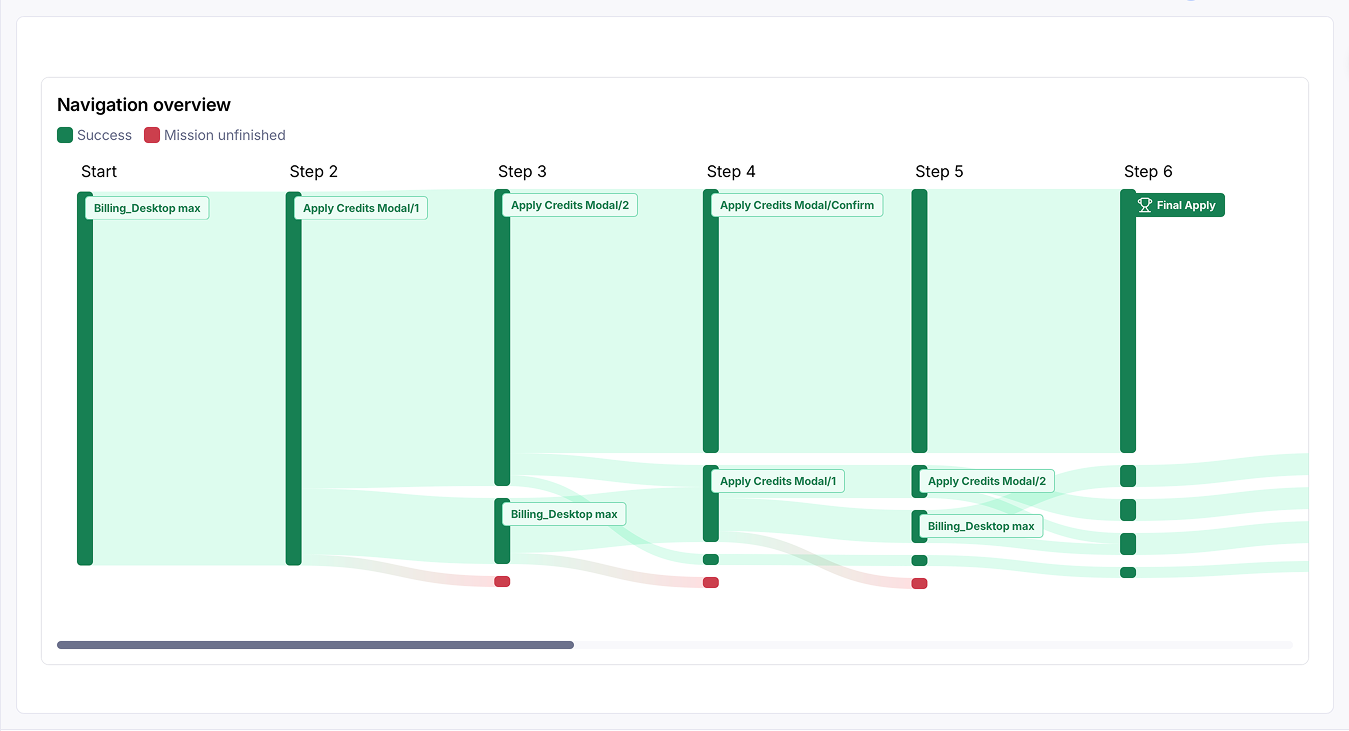
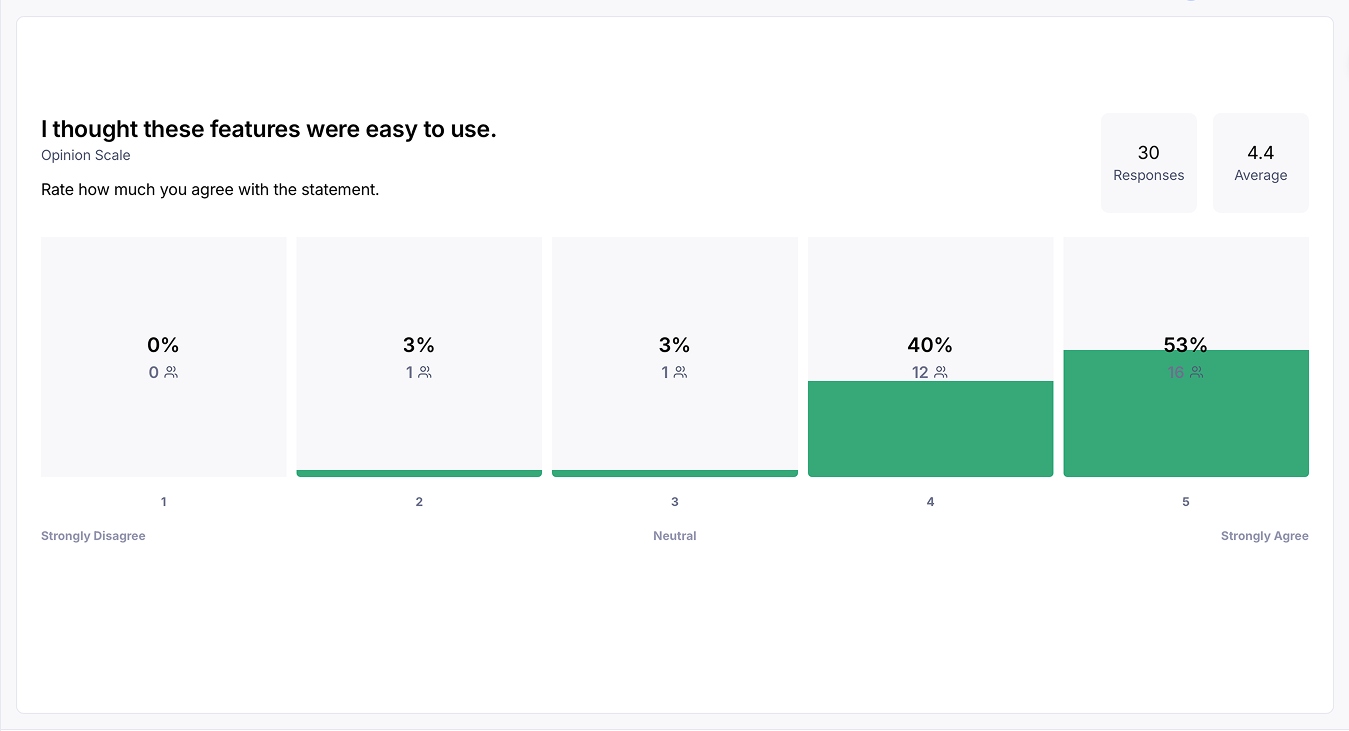
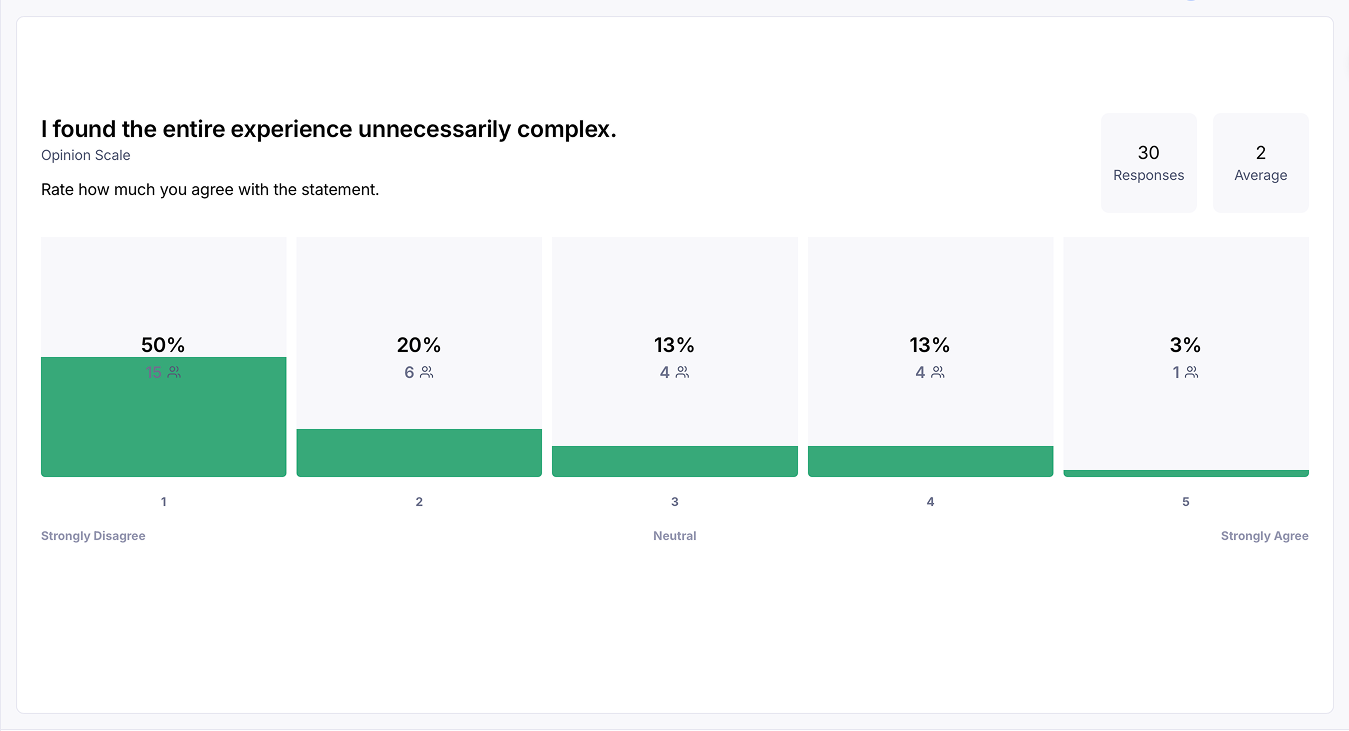
To validate the usability of the main flows I conducted a Maze usability study with 53 participants to gather early feedback.
Overall results were positive, showing strong task completion and understanding of the flow.
A small number of participants struggled, mainly due to unfamiliar interaction patterns. These insights were used to refine the design and inform improvements in the next iteration.
Impact
After launching the payment portal, we analyzed usage and performance data over the first month and compared it to the period before launch.
Finance metrics
300% increase in google searches for Safe Stays Credits
Credit purchases were made in the first few hours after release
Agency’s overdue balance reduced from 60% to 30%
Customer feedback
“I got to demo this today and the contact was amazed at how seamless the process is to see the balance owed, request credits, etc.”
-Director of Strategic Partnerships